
The Real Reason You Haven’t Finished a Book in Five Years (It’s Not You)
If you’ve quietly decided you’re just not a reader anymore, the evidence points somewhere else entirely. It isn’t your attention span. It’s what you’ve been reading on.
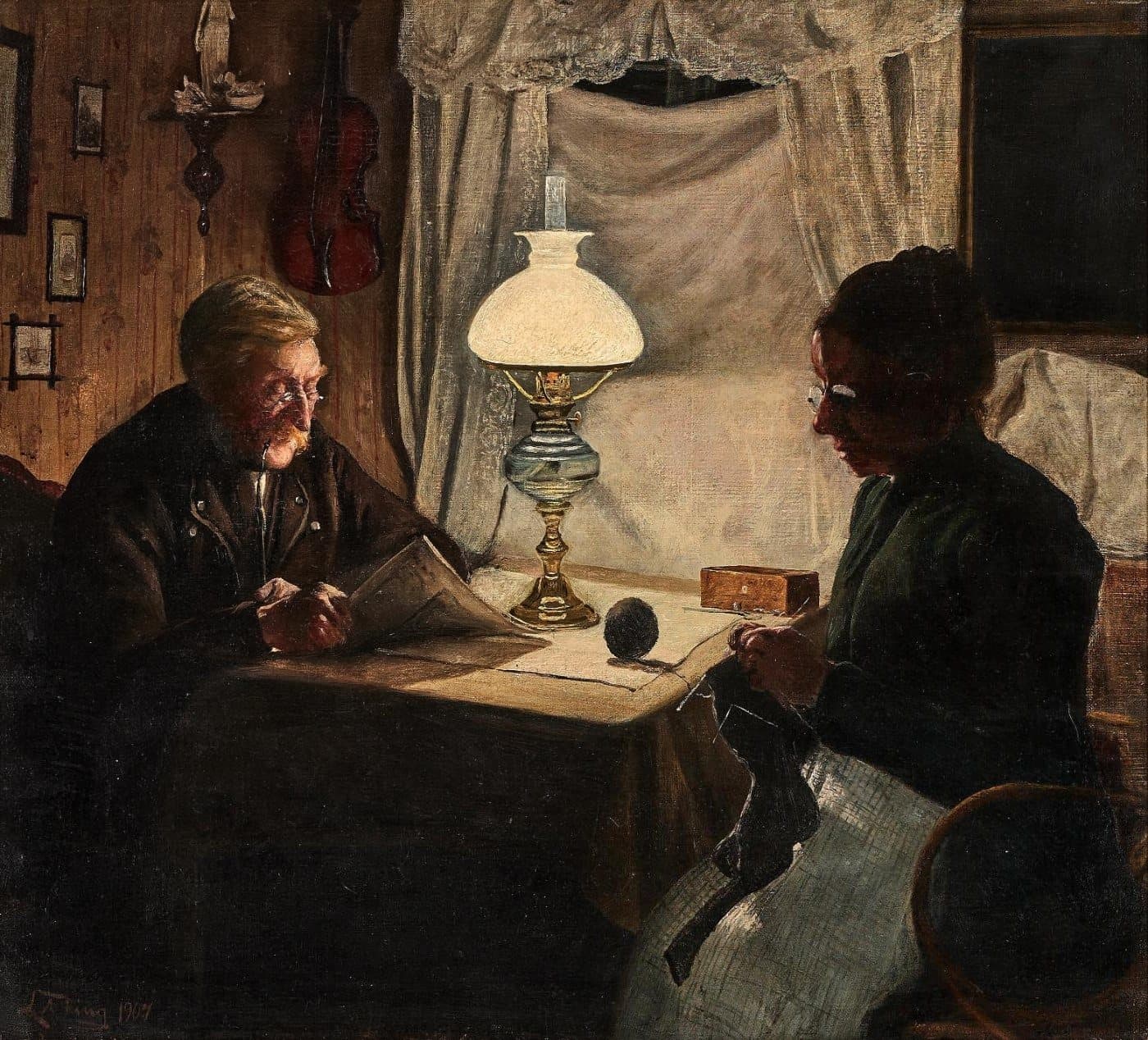
You used to read. Somewhere between school and now, it stopped — not on purpose, not all at once. You bought a few books with good intentions. Some are still on the nightstand with a bookmark stuck three chapters in, exactly where you left them the last time you tried. If you’ve quietly decided you’re “just not a reader anymore,” here’s something worth knowing before you accept that verdict: the evidence points somewhere else entirely.
It isn’t your attention span. It’s what you’ve been reading on.
For the last decade, most of what passes for “reading” has happened on a phone, a tablet, or a laptop — usually in five-minute windows, usually with a notification waiting one swipe away. That matters more than it sounds like it should. A 2024 meta-analysis pooling 49 separate studies found that people who read the same material on paper consistently scored higher on comprehension than people who read it on a screen (EdWeek). This isn’t a nostalgic preference for old-fashioned things. It shows up in brain activity: EEG studies find a higher ratio of theta-to-beta brainwaves during screen reading — the exact pattern associated with mind-wandering and difficulty sustaining attention — while print reading produces more of the higher-frequency activity associated with focus (NCBI/PMC). Readers on paper also behave differently without trying to: they reread difficult passages more often, and they remember the order events happened in more accurately, likely because a physical book gives your brain something screens don’t — a sense of where you are in it, literally in your hands (BrainFacts.org). Meanwhile, screen readers tend to skim in a scattered, F-shaped pattern across the page, picking up fragments instead of following the actual thread of an idea.
Put plainly: if your last five attempts to get through a book happened on a Kindle app between other apps, you were reading in the one format that research says works against sustained attention. That’s not a character flaw. That’s an engineering problem, and it has an engineering solution.
The book itself is usually part of the problem too
Even among people reading physical books, the book can quietly work against them. Dense pages with narrow line spacing and long lines force your eyes to do more tracking work just to stay on the right line — work that competes directly with the mental effort of understanding what you’re reading. Research on struggling readers is specific here: lines in the 50–70 character range are meaningfully easier to track than the long, packed lines typical of a mass-market paperback (NCBI/PMC), and spacing set to roughly 1.4–1.6 times the type size measurably reduces the strain of just staying on track, independent of font size (Rello et al., dyslexia-friendly typography study). Font size alone — just making the letters bigger — helps only modestly on its own. It’s the combination of size, spacing, line length, and margin that does the real work, which is exactly why “get a large-print edition” often doesn’t fix the problem for someone who isn’t struggling to see the letters, only to hold onto the thread of the sentence.
Two commonly recommended shortcuts are worth being skeptical of, too. OpenDyslexic, the specialty font designed for dyslexic readers, does show some comprehension benefit in research — but it also consistently slows reading down, because its unusual letterforms take more effort to process, not less (NCBI/PMC). Bionic reading, the trend that bolds the first few letters of every word, has been tested on more than 2,000 readers with no measurable improvement in speed or comprehension — sometimes a small cost (Readwise). Neither is a scam, exactly. They’re just not the lever that actually moves the needle. Spacing, line length, and a real paper page are.
A strategy that doesn’t require you to trust your own willpower
Here’s the part that actually gets you through a book, and none of it depends on discipline you don’t currently have.
Read in chunks, not chapters. Pick a small, fixed unit — one section, five pages, whatever feels almost too easy — and stop there on purpose, even mid-scene, even if you want to keep going. Chunking is one of the most consistently supported strategies in the reading-comprehension literature for attention-limited readers, because it removes the visual and mental overwhelm of “the whole book” as the unit you’re facing (reading comprehension strategies research, University of Northern Iowa).
Let a physical bookmark do the motivating. Watching it move through the book gives you a concrete, visible measure of progress — and that small, repeated sense of “I did that” functions as a real psychological reward, the same mechanism researchers describe as a paragraph-by-paragraph dopamine boost that keeps attention-limited readers going when a whole book feels too large to face (ADD Resource Center).
Keep the book somewhere you’ll see it, not somewhere tidy. Attention that struggles to sustain itself responds to what’s visible, not to what you intended. A book on the nightstand competes with nothing. A book on a shelf across the room competes with everything.
Choose the edition, not just the title. A book set in a generous, well-spaced typeface with a shorter line and real margin is not a “special needs” version of reading — it’s simply removing friction that has nothing to do with the ideas inside it. You are allowed to want a book that’s easier to hold onto, physically, without that meaning anything about your intelligence or your discipline.
You get to start again quietly
Nobody needs to know your last attempt didn’t work. Pick a short book, in a well-set edition, and try one chunk tonight — not the whole first chapter, one chunk. If the last five years taught you anything, it’s that “read the whole thing tonight” was never going to work anyway. This time, don’t ask more of yourself than the format can support.